I’ve been a fan of coaching for years, it can really help people or teams improve how they work. When I was first introduced to this skill there were a few things I didn’t find obvious and took a while to learn.

First chance to do some training
I’d read about coaching and thought I understood the basics, but the first time I got training was a 2-day course about 10 years ago. This included some work in pairs, where one of us brought a challenge and the other practised the coaching skills we’d been learning. Some challenges were situations I found familiar (similar to things that come up in my job) so I felt confident understanding issues and asking sensible questions. For others, I felt like their role was completely different than mine and I had no hope of following it unless I took up the whole time asking for details. For these, I got a bit stumped about what to say and had to fall back on context-free “open questions” the trainer had suggested earlier: “What else could you try?”, and “Who else could you ask about this?”
The surprise for me was: Those latter sessions, where I felt most useless, were the ones the partners appreciated most. They felt this was a very different, more useful type of conversation, and had come away with new ideas and different thinking for a problem they’d felt stuck on.
This helped me realise I’d kind-of missed the point in some reading I’d done about coaching. I’d imagined the main reason to use open questions, and not steer them to the answers I’d recommend, was in the style of the “teach a person to fish” proverb: rather than giving people the answer from your experience for a specific challenge, help them work through how to come up with answers themselves and come to that “right” conclusion.
In lots of cases, the answer I’d come up with isn’t going to be a good one for another person to use — even in domains where I have lots of experience and could confidently give a prescription.
- My relationships with people aren’t the same as others might have; anywhere I’m imagining changing stakeholder minds would be very difficult, or I could safely bring up delicate topics in a team, might not be the situation my coaching client is in.
- My skills aren’t the same as others might have; anywhere I might say “doing that in C++ would be far too hard” or “it’s some straightforward maths”, I could steer someone in a poor direction for them.
- My goals for a given problem aren’t the same as others might have; in most thorny problems there’s no “perfect” answer or objective success criteria, and it’s easy for me to assume the things I’d aim for are exactly what anyone in the same situation should aim for too.
There’s still a lot of skill and experience needed to coach people well — working out which questions to use, how to suggest routes a conversation can take, and other things all take time to practice. But these early “I don’t know what to say here” experiences were very helpful in showing me just how much potential there is in letting the client steer things. There’s so many cases where the course of action a client’s picked is nothing like what I would have recommended if asked for advice — and it’s worked out much better than any advice I could give.
I wrote recently about the book The Secrets of Consulting and its “jiggling” metaphor: “using questions and observations that prompt people to look at problems a different way, and get themselves unstuck.”
Every problem looks like a nail
I came away from this course very excited about the potential for coaching. People had such insightful ideas for dealing with challenges — and I could help them unlock these! For a while, I used coaching techniques in 1:1 conversations, in team meetings, in response to all kinds of “what do I do about this” problems people came to me with. I’m sure I was insufferable.
Sometimes, a wide-open question and a nudge to rethink things is something people appreciate. But adopting that as your default reply to everything makes you sound like Yoda, and can just confuse or annoy people who’d like an answer quickly, or who asked you something because your position and experience mean you should have good advice for them.
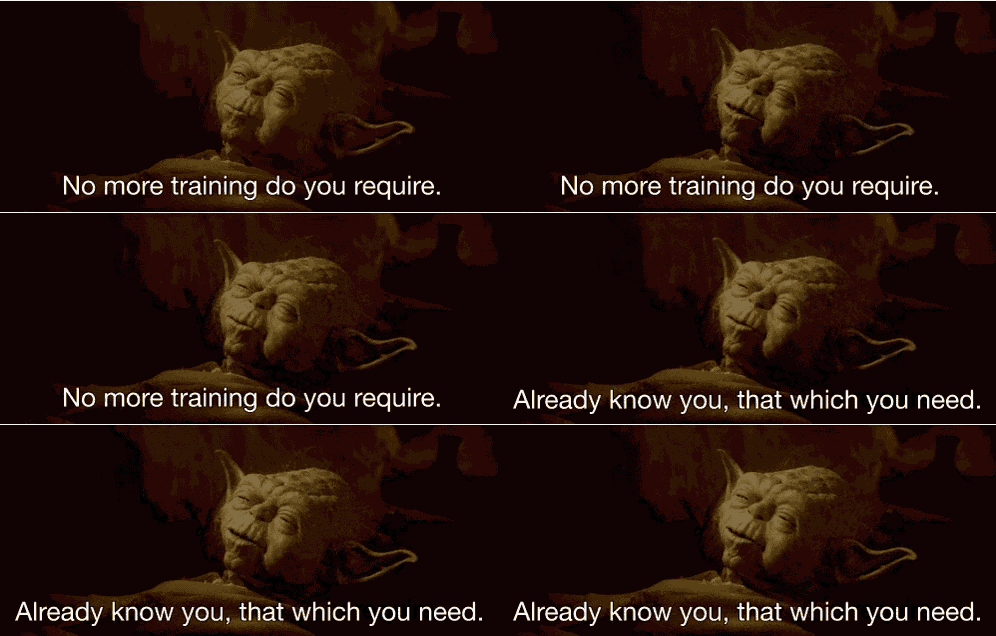
So, how can you know when you should use coaching techniques and when you should do something else? For a good while, I didn’t realise: you can ask.
I was lucky enough to do a year long coaching programme: get taught techniques and try them out in a class for a few days every few months, with coaching practice in between. One of the teachers there shared how he frequently asks “do you want a straight answer?” when he isn’t sure. This works both in formal coaching sessions — where someone has signed up to be coached by you, but is itching to know what you think about some topic — and in any of the other situations I mentioned above, where an ad hoc open question or two might be appreciated.
One more thing…
I’ve got lots of notes on coaching, but they’re all either mental notes (like the stories in this post), or scattered in paper notebooks. Writing them up in blog posts seems like a helpful way to reflect on what I’ve learned, and maybe spot some new ideas as I go over things. I think this will be the first post in a series.
Leave a Reply