July‘s Deliver Sessions was at Greater Manchester Digital Security Hub (DiSH) near Deansgate, where Barclays hosted us. We had two talks, one on hiring for potential and one on unlocking the potential of your teams. A nice pairing!
Where do we draw the line at potential?
Why it’s important to hire for potential and the impact of AI. I’ll also be sharing some hints and tips to try in your organisation.
— Gemma Cameron, tech and business consultant
Gemma shared her definition of “hiring for potential”: Considering people who haven’t got everything on your shopping list right now, but they could have in future. There’s lots to gain from this, as you’ll be able to hire people from quite different demographics and experience than you might be used to:
- diversity of thought
- build your pipeline of talent
- bring fresh ideas and experience
- add people who’ll challenge the status quo
- get a team that better represents your users.
It takes planning and effort to do this well. Some reasons people don’t might be: too much delivery pressure (we need people who can do the job immediately), teams don’t feel they can (no experience of supporting people to learn a role), and a belief that AI will do the junior’s job from now on (”wrong headed, for so many reasons”).
Some of these concerns are fair: you really can’t just hire people who need support to grow into a role and then leave them to it, that won’t lead to good results. Gemma talked through a framework she’s developed for ensuring you make this a good experience for everyone involved.
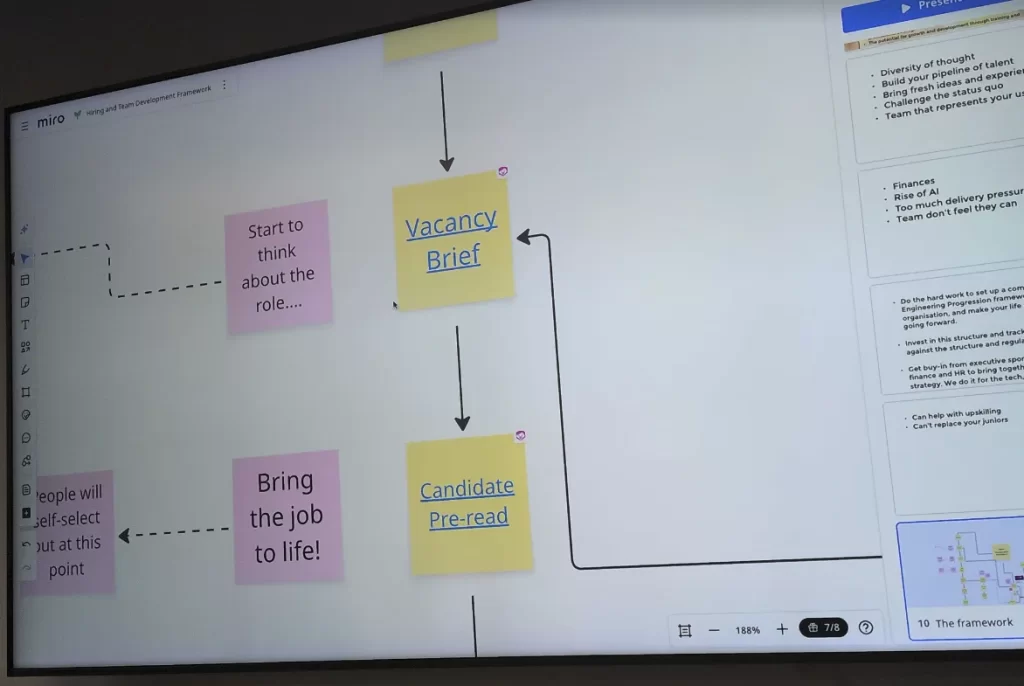
Planning needs to start early, when you design the role: don’t have a huge shopping list of skills and behaviours, either in job adverts or in career progression frameworks. What are the 4 or 5 must haves? And, can you describe what the job actually involves, in a way that brings it to life for people? When you’re hiring for potential, you can take the opportunity to build a team. What perspectives are you missing?
You should think about all this and more (how you’ll run a fair and welcoming interview process, how you’ll source different candidates than you usually get, and many other things), and get clear on it all, before you start advertising. “Put in the hard work to save time in the long run.”
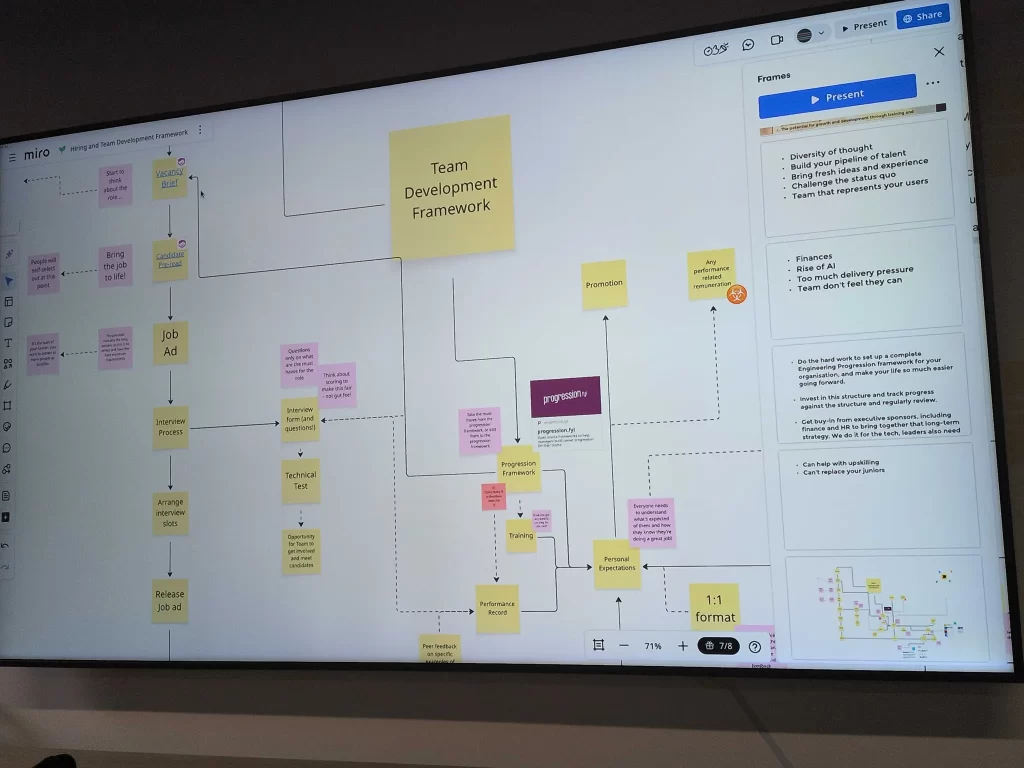
Once candidates, start, continue to focus on small lists of well-defined things that matter. You can copy those role expectations from the job ad and bring them into 1:1s: ask them to find examples, and seek out ways to develop these skills. You can also use simple measures to help quantify how a team is doing — the DORA 4 key metrics are good for this — and help new starters think about “what can you do to improve these measures?”
Gemma left us with a helpful set of links:
- progression.fyi
- https://digitalblog.coop.co.uk/digital-development-standards/
- https://engineering.atspotify.com/2014/09/squad-health-check-model
- DORA Metrics
You can find Gemma on LinkedIn and rubygem.blog.
Unlocking Flow – Value Streams, Platforms, and Sustainable Team Ownership
Customers don’t see your teams, your tools, or your architecture — they see the journey. They want something done, and they want it done well. But too often, we organise around roles, layers, and handovers instead of flow. This talk is about turning that inside out: aligning teams to outcomes, not job titles.
We’ll explore what happens when teams own a whole slice of the journey — build it, run it, learn from it. Not developers handing off to ops handing off to frustrated customer support agents — but people working together across the lifecycle. Platform teams become enablers, not blockers. With tools like Event Storming, Wardley mapping, and a healthy dose of curiosity, we can shape teams around real value and move faster with confidence.
— Andy Norton, director of engineering
Andy says: your customers experience journeys, not org charts or tech choices. Lots of internal metrics aren’t very related to anything customers care about. By mapping out things that matter, the flow of work and value becomes visible and you can all start pulling in the same direction. Value streams make problems visible and solvable, and they exist even if you haven’t mapped them out.
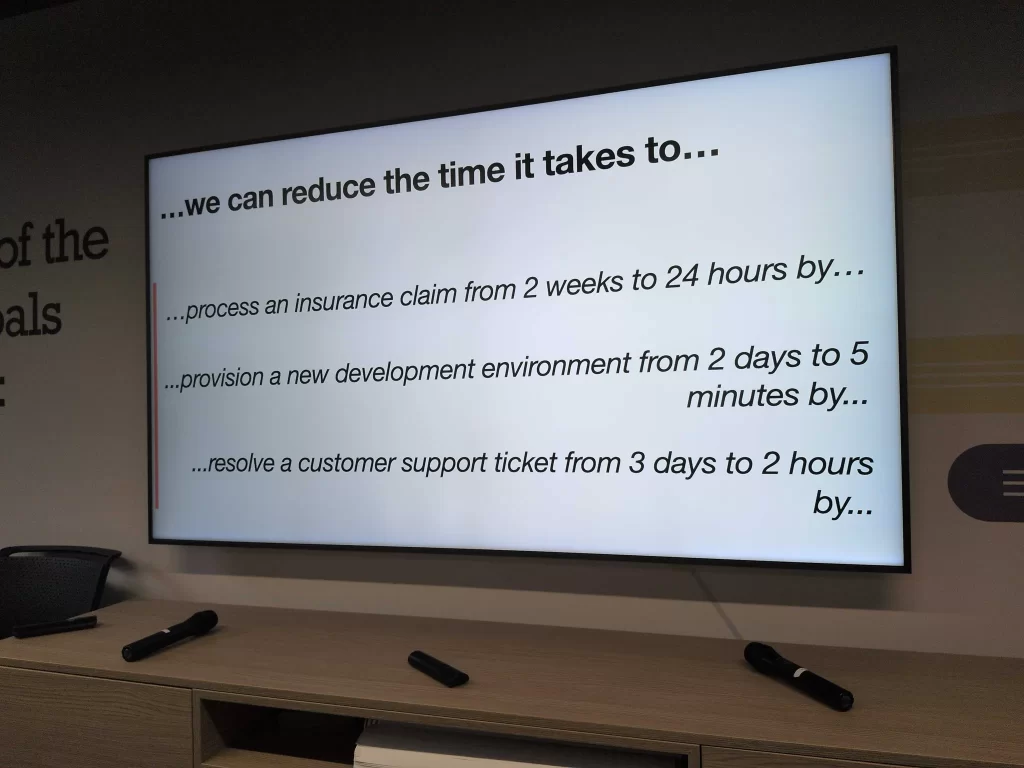
If you can split up your tech and teams well, you’ll find you can untangle the big mess and get teams who understand their area of the business and have the ability to improve it. Andy recommends Event Storming workshops to explore and agree things.””
“it’s developer (mis)understanding that’s released in production, not the experts’ knowledge”
— Alberto Brandolini, who also coined Brandolini’s law
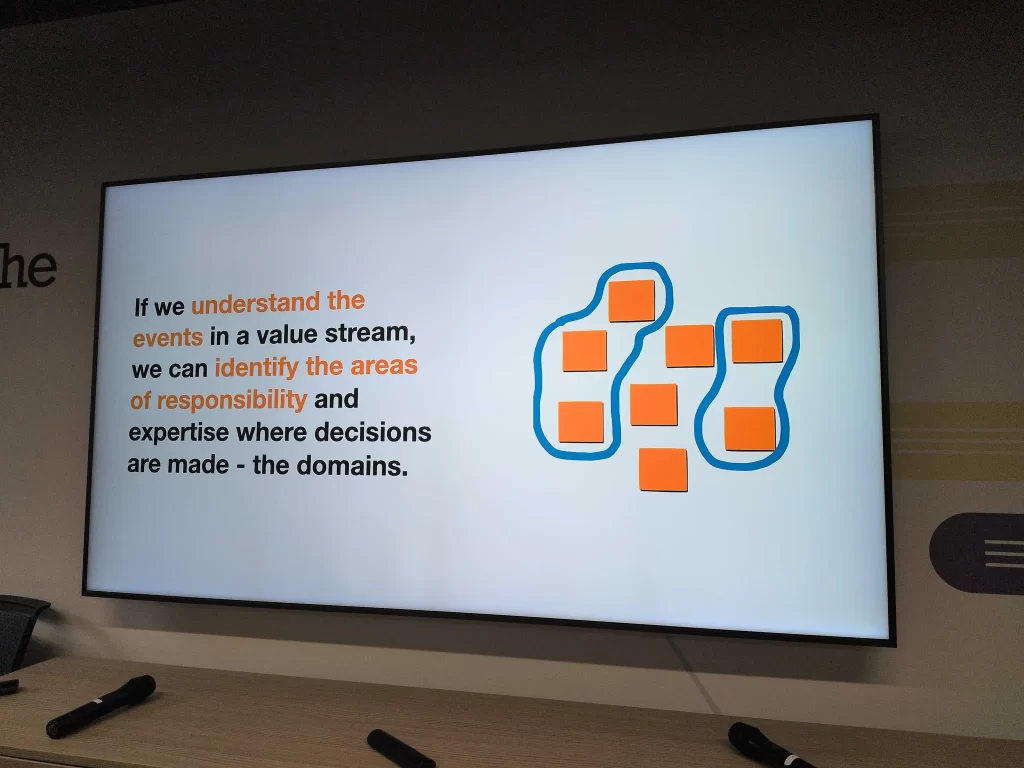
And once you’re clearer on this, you can start to organise teams around this and able to move independently on more things. This reduces friction and overhead, and can hugely improve how responsive your teams can be. Andy listed some good signs of teams becoming more independent:
- You can deploy without asking permission from the “deployment gods”
- Your database changes don’t require a committee meeting
- You can add a feature without filing tickets with 3 other teams
- Your monitoring shows what you broke, not just “something is broken somewhere”
- You can rollback your own mistakes (and learn from them)
- Your APIs are yours to evolve (within reason)
Andy moved on to explore how these can be used with other helpful techniques, with examples such as how tech teams might help sell Co-op sea salt & Chardonnay vinegar crisps (”because they’re the best crisps”). These ideas brought to life how you can use Team Topologies (”everyone talks about team types, but team interaction types are more important”) to identify what teams you might need over time, and how they can support each other.
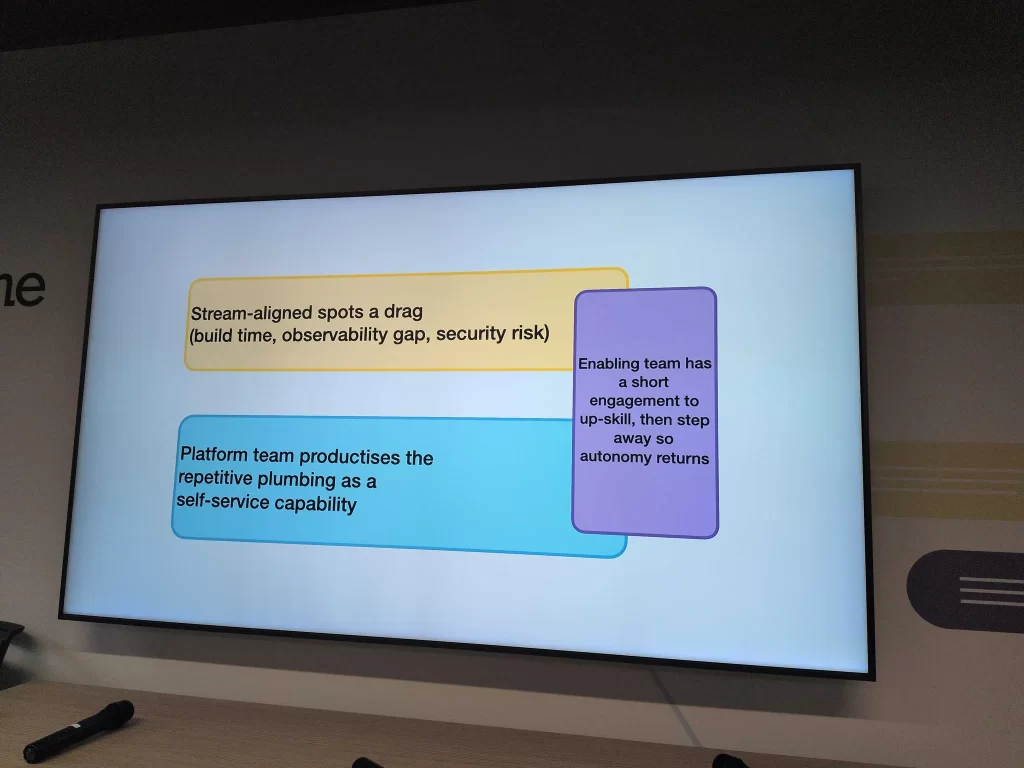
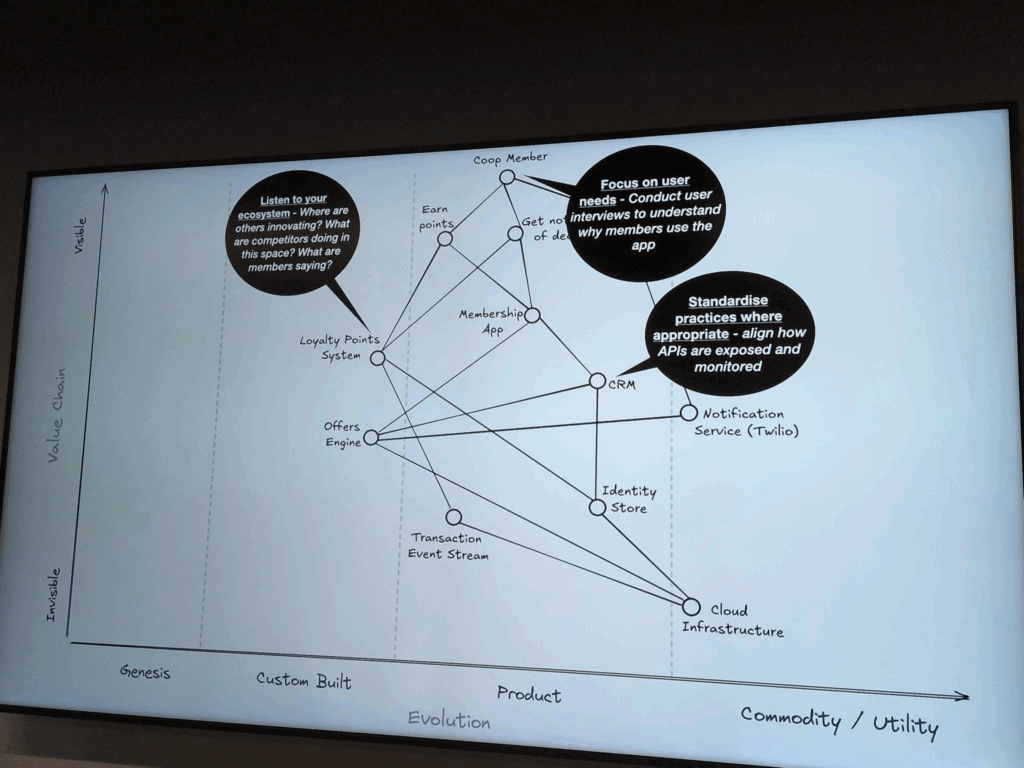
Then Andy moved on to Wardley Mapping, and how you can use it for decision-making now (”Let’s play the build or buy game!”) and in the future (predicting where tech and market opportunities will change, and deciding early how to respond to these.
All these separate techniques get talked about a lot, and it can be hard to know how to make them all useful — Andy’s talk was a great tour of practical ways to work with them, and had lots of suggestions for further learning.
You can find Andy on LinkedIn, read more about his work on the Team Topologies site, and might like to take a look at the Fast Flow conference he’s helping to organise.
More from the meetup
Deliver Sessions is taking a Summer break after this one; we’ll be back on 11 September 2025 with Deliver Sessions: Don’t panic (sign up now!)
You can also sign up to follow the meetup to make sure you hear about new dates as they get confirmed, and read about lots of past events in the Deliver Sessions archives.