I’ve been a co-organiser of Deliver Sessions meetup (along with Chris Burns and Zoe Rigley) since 2018, and now I do a writeup after each event. Those posts started in 2022 with “an evening of lightning talks”, and I’ve kept up good habits since then — lots of posts in the Deliver Sessions archives.
However, that leaves a long list of older talks that were lost to history. Through lockdown and a long stretch after where in-person meetups really weren’t happening in Manchester, we used Emily Webber’s “in the Ether” format to turn into a remote-only meetup:
This event is using the in the Ether format, for more info or to find out how to run your own meet-up in the Ether please see intheether.emilywebber.co.uk
So many good memories and helpful ideas that we have no record of. Until now!
I’ve been having a look through old scraps of notes and getting in touch with speakers to ask what they remember. Let’s have a look at some of those sessions from before we kept notes …
March 2020: The power of people
Our first online meetup was in March 2020, where we had two speakers. First up: Vimla Appadoo with Culture + Code ≠ Delivery. She asked: “What does culture actually mean and what does it have to do with getting stuff live?”
This talk covered lots of painfully familiar situations, and had great advice for improving communication and using that to improve how your organisation works. Vimla’s written up some of these ideas in “Understanding Culture & Priorities” (part 1, part 2). She also gave a talk on similar themes at NDC London — see “How does designing your culture help your code?”
Next, Holly Donohue presented Deal With It – 5 Ways to Grow Your Personal Resilience. There can be lots of frustrating situations at work, and it’s easy to feel angry, disheartened, and find them replaying in your mind again and again. Holly presented a range of practical techniques she’s used, and we all left feeling much better prepared for our next challenges.
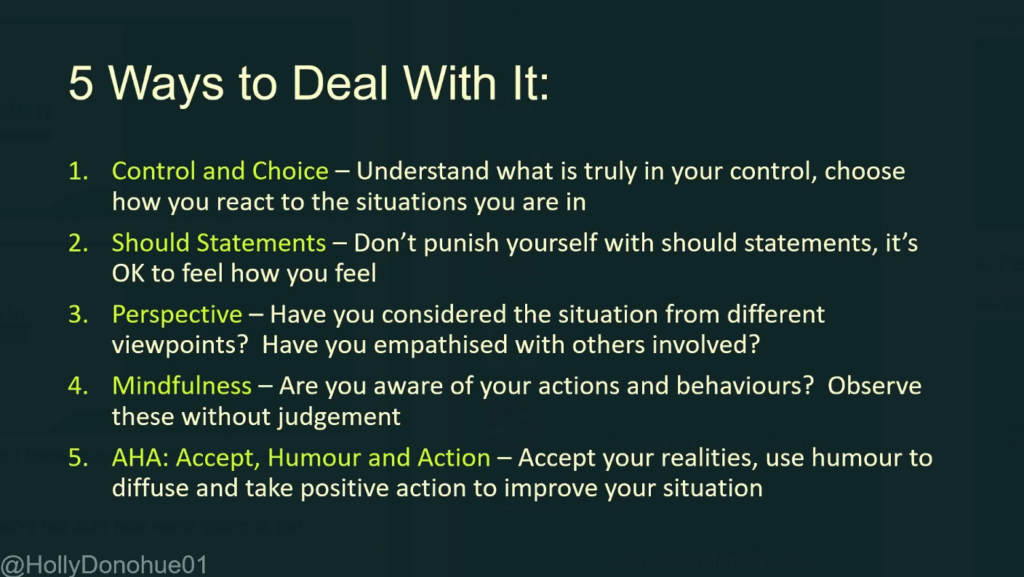
Holly later did a related talk at MTP Engage Hamburg — see “Humility and personal resilience in product”. And she made another appearance at Deliver Sessions, with “WTF is a product strategy anyway?”, a topic lots have wondered about but few are brave enough to ask.
November 2020: Minimum Viable Estimation: What’s the least you can get away with?
Tackling one of the biggest headaches in tech. I gave a talk about techniques I’d tried, then interviewed co-organiser Zoe Rigley about how she was making a version of #NoEstimates successful where she worked, then handed over to attendees to talk through their own experience and challenges.
I was doing a lot of thinking about estimates at the time; after more talks, workshops, and training activities, I wrote up all my thoughts in a Minimum Viable Estimation series that totalled 12,000 words. That’s everything that needs to be said about estimation, no-one need ever mention it again.
January 2021: How can we get better at talking?
Cara Bermingham ran a session on How can we get better at talking so we can all get on with work? She explained that she’d seen how much poor communication holds teams and individuals back from being productive, and introduced lots of things she’d tried to help.
5 dysfunctions of a team and Tuckman’s model of team development are helpful to be aware of, and Cara had a lightbulb moment reading “The Talking Revolution”, which emphasises your own responsibility: “We are each the central player in our own relationships and communication network”.
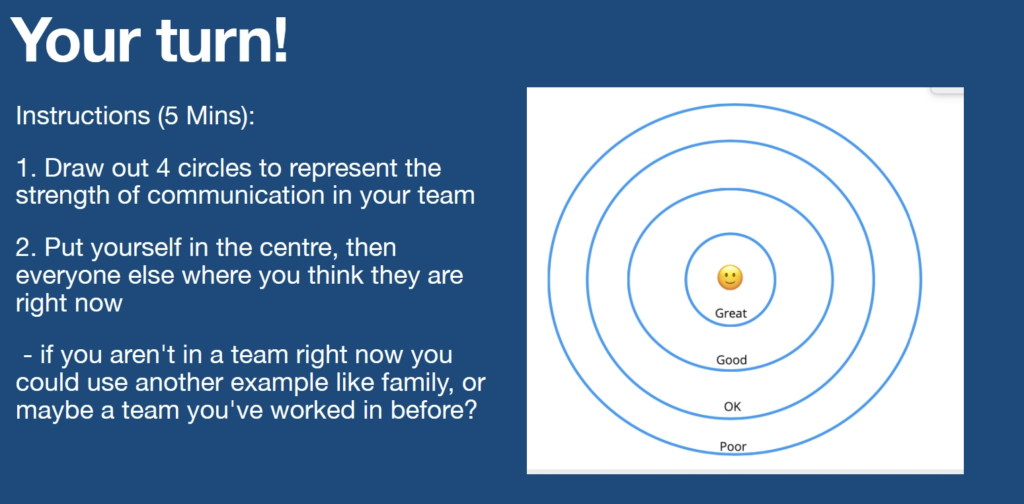
We all drew diagrams, then did reflection and discussion:
- For the people furthest from you: What assumptions do you have about them? How could you validate those assumptions? And, what’s a first step you could take to bring them a bit closer to you?
- For those closest to you: Why is communication so much easier with them? Is there something you do with them, that you could apply to someone else?
- Bonus bias question: Are the people closer to you, more like you?
You can read lots more from Cara on her blog.
Next, Eleanor Mollett presented On not being a shit umbrella. Shielding your team can seem admirable, but Eleanor argued it can be harmful to both your team and to you, and offered better ways for managers to provide support.
Eleanor wrote a blog post covering this talk, and also gave a version of it for Agile Oxfordshire — no travel needed for remote meetups! She returned to Deliver Sessions after we started keeping notes on this blog, so you can also read her advice about “Working with developers — intervention without overstepping”.
November 2021: The human side of delivery: Forging relationships and building trust in a remote world
Francesca (Chess) Marsh and Andy Tabberer gave a talk on a topic I think many teams still struggle with! They advise:
- Taking time to learn about each other, with shared profiles, maps of where everyone’s based and facts about them, and regular “pet photos”, “what’s on your desk”, and other activities.
- Talking about how your team work together and supports each other, and checking in on people when home and work stresses might be on their mind.
- Give recognition, publicly, for anyone you appreciate.
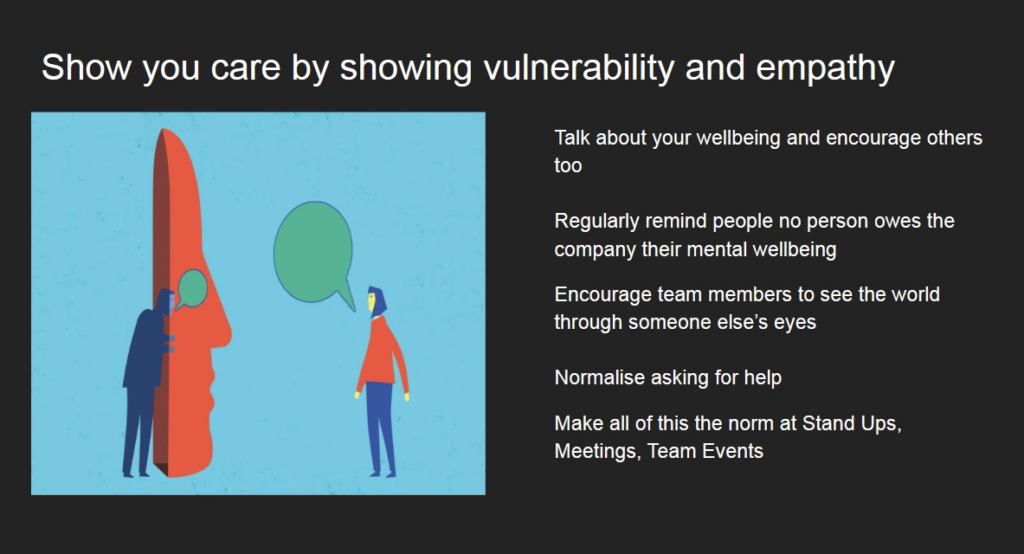
Helpfully, Andy’s written a blog post with more details from this talk. Chess later returned to Deliver Sessions to run an IRL workshop: see “Facilitation and connecting people”.
February 2022: Are we nearly there yet?
Léonie Harter talked about the challenges of explaining exploratory, agile delivery to stakeholders used to predictable answers and waterfall plans.
- Talking through different kinds of work (repeatable, fewer decisions on the way, versus innovative and with opportunities for learning) didn’t really help — can be just words on a page, and a struggle for people to engage with (”but can’t you just…”).
- Ideas about complexity, and the Cynefin framework, do have useful answers — but only for people who are very interested and willing to look into them.
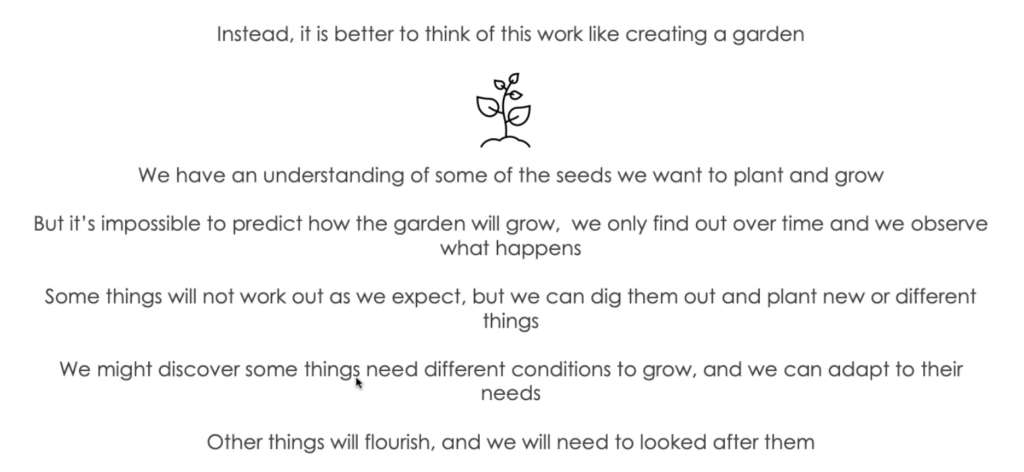
- The most useful tactic she’d found was storytelling. Software development as gardening, rather than building construction, helps people get some of the concepts.
Deliver Sessions IRL!
We had our triumphant in-person return with a talk from Sol Byambadorj in September 2022: Lessons I learnt from trying to be a decent human – practical techniques and principles to live by.
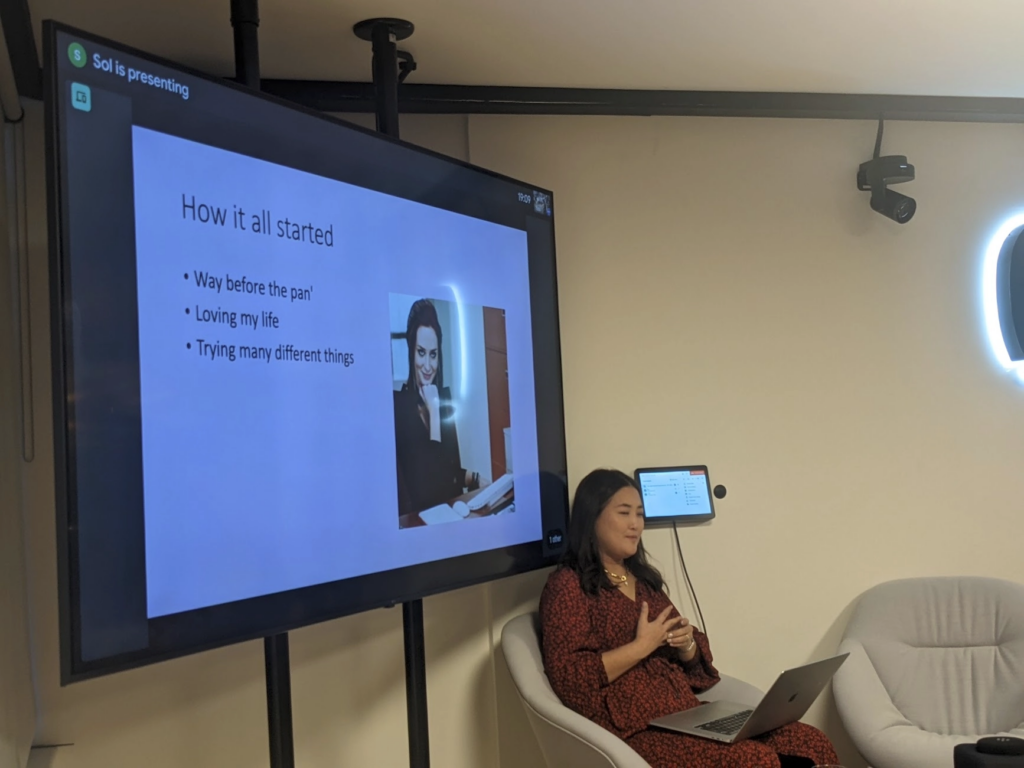
Sol talked through the ‘holy trinity’ (time, energy, money) — you have a budget for the combination of these. Anything you spend some of these on, means there’s other things you can’t do. So choose wisely.
She talked about realising she needed to prioritise in her own life, and how a huge ‘I’d like to do’ list went to a very few things Sol really wanted to do:
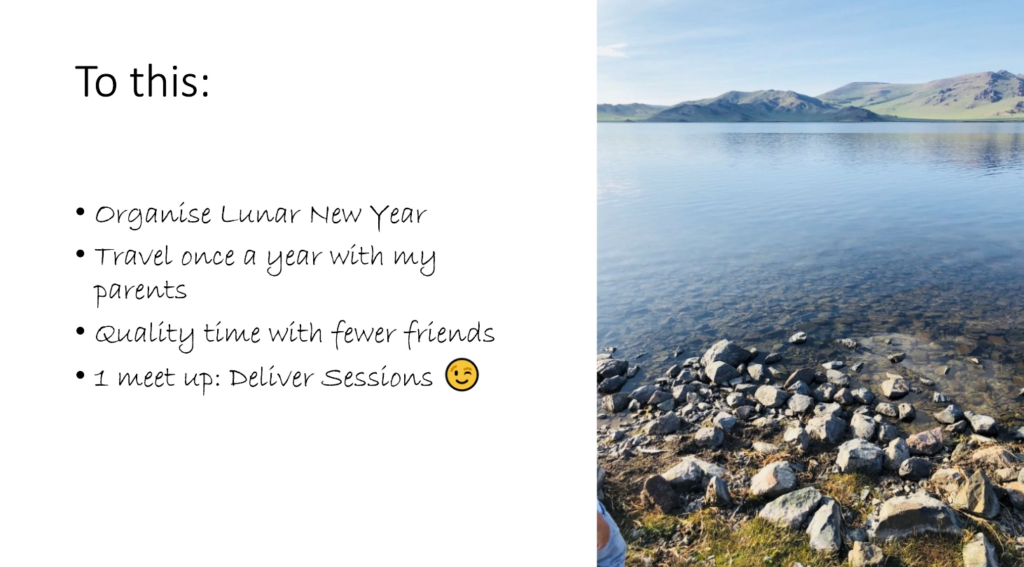
This was an very personal talk about wellbeing and understanding what matters to you — and I liked how there was plenty of agile-related wisdom in there too (limit work in progress, reduce batch size, focus on continuous improvement). Some techniques we got to try:
- Spider web diagrams: label the end of each line with an area that’s important to you, and rate yourself 1-6 on how you’re doing with it. Reflect on gaps and things you want to change.
- Say/do matrix: What do you want to be known for, and how well is that going? What might you try to change that?
- And remember: perfect is the enemy of the good, and consistency pays off.
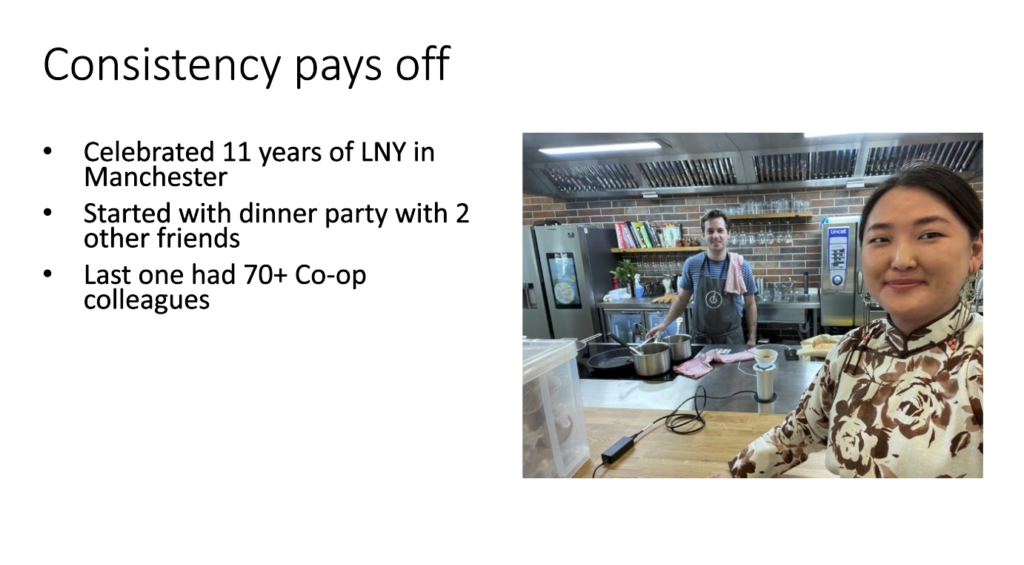
Sol later took a version of this talk to Agile Manchester; I’ve got some more notes from that event, including a guide from Sol on how to build a budget.
From the Deliver Sessions right after Sol’s appearance, I started my good post-event publishing habit. So if you like, you can read notes from every Deliver Sessions meetup since. And you can come along to future ones!
- Follow the meetup on Eventbrite or LinkedIn to hear when events get announced, and sign up to attend.
- Contact me or another organiser (Chris Burns, Zoe Rigley) if you have a talk or workshop idea.