I went to London for LDX3 in June 2025. This brought 3 other conferences together for the first time (LeadDev, StaffPlus and LeadingEng) into one huge conference with lots of tracks, activities and attendees.

I came away with a long list of links to look into later. This post should be handy for me to keep track of them all, and for anyone else who might like to see if anything grabs them. Enjoy!
Camille Fournier talked about escaping the rewrite trap. I’m a big fan of her work — I’ve shared her blog post OPP (Other People’s Problems) more times than I can count, and loved her book “The manager’s path“, which starts with perhaps my favourite-ever opening quote:
The secret of managing is keeping the people who hate you away from the ones who haven’t made up their minds.
– Casey Stengel
Links:
- A post with some themes from her talk: Avoiding the rewrite trap
- A post about her newer book on platform engineering: Following the manager’s path
Clare Sudbery ran a workshop on how to deal with the “technical” in “technical leadership”, with lots of advice on where to put your limited time when you’re in a role that no longer involves working with code every day. She’s written lots on related topics:
- An article on losing your edge
- The stupidity manifesto, which you can sign up to
- A technical leadership newsletter
- Also, Clare hosted an excellent podcast series: Making tech better
Next, a “table talk” — a conversation with any attendees who’d like to turn up, facilitated by Hazel Weakly, Greyson Junggren, and me — on the topic of “How can you measure developer productivity without damaging morale?”
Hazel had a good recommendation: there are broadly two schools of management, and you need to decide which one you’re in. Do you think employees in general are trying to avoid work and need tricked, coerced, and persuaded into it? Or are they internally motivated to do a good job, and get satisfaction out of being productive? I’ve seen a nice description of these on Wikipedia’s article about Theory X and Theory Y, which has a diagram to help remember which one’s which.

I prepared for the discussion speed-reading some notes I made a while ago on this topic, lots of useful things I’d forgotten about! A session ages ago from Sophie Weston prompted me to do all this reading up and writing down: Agile in the Ether, IRL: Beyond DORA. The gist of that post is: read everything Dr Cat Hicks writes.
Blogging is very helpful for leaving yourself notes like this (I thought Giles Turnbull once called blog posts “addressable parts of your brain”, turns out I was paraphrasing him).
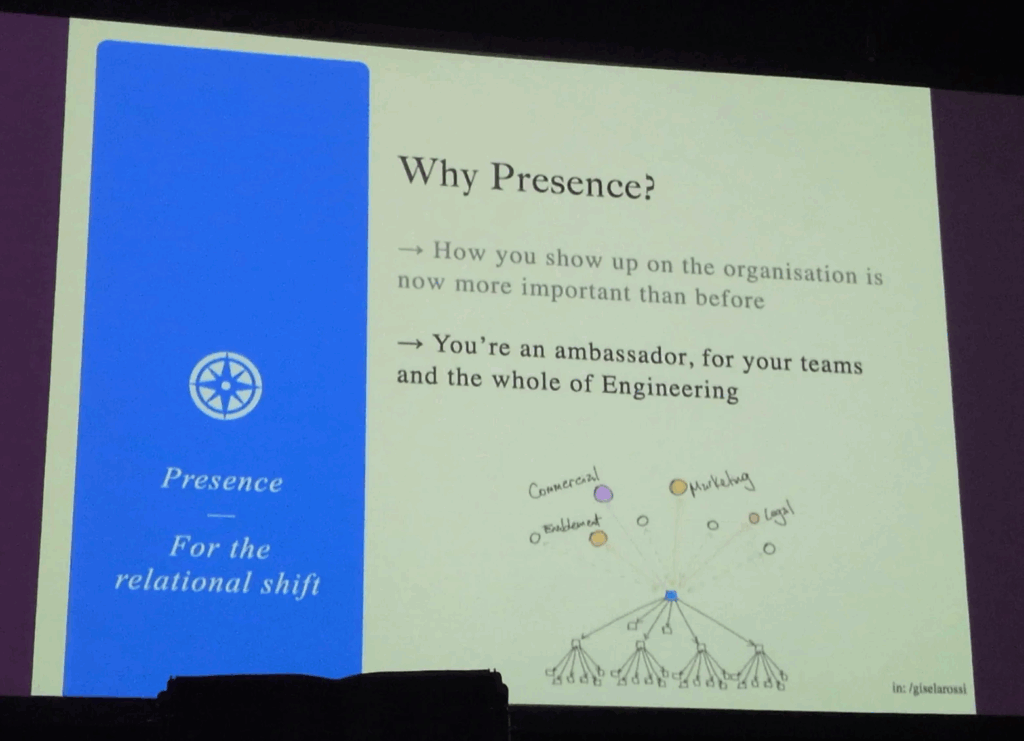
After that, Gisela Rossi gave a talk on transitioning into a manager of managers role — she said when she made this move, she struggled to find helpful advice on it, and wants to correct that. She shared a detailed doc of articles, templates and book recommendations.
Nick Means has presented at LeadDev many times — I think the first time I ever heard of the conference was when I found his Three Mile Island talk on YouTube. That’s a fantastic talk about the causes of accidents, and recommends Sydney Dekker’s “Field guide to understanding human error”
At LDX3, Nick told the story of a 1978 plane rescue over the Pacific, and linked that “lost and alone” feeling to wide changes in the tech industry. He recommends a paper called “The new developer” (Catherine M. Hicks et al) for ideas on how to cope with this. (If you’re following recommendations as you read this post, you’ll already have read everything Dr Cat Hicks has written.)
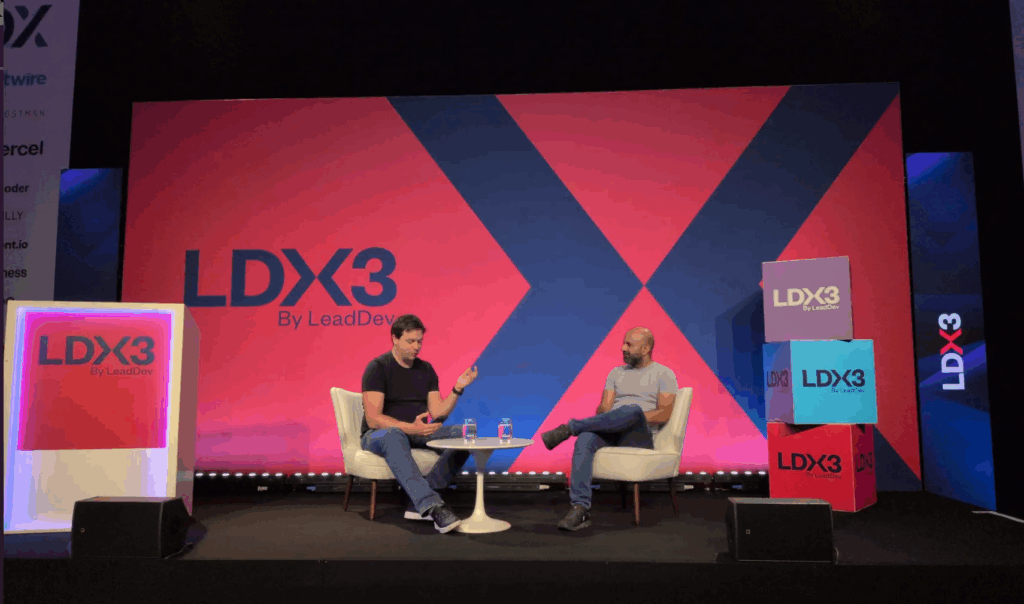
Day 1 ended with a live recording of the Pragmatic Engineer podcast. Gergely Orosz interviewed Farhan Thawar, VP and Head of Engineering at Shopify, about how software engineering works there. Answer: with lots and lots of AI!
- The podcast episode should appear soon: keep an eye on the episodes list
- Shopify use MCP to coordinate their AI tools — I hadn’t heard this term before, but the Pragmatic Engineer newsletter has an explanation
- And for a wider look at AI engineering across the industry, see The AI engineering stack
Next morning, I started with a workshop from Suzan Bond on managing, mentoring, coaching, and how best to use each. “Management” often gets dismissed as old-fashioned or closed-minded, but all 3 of these are valuable modes you can choose between. Suzan shared:
- Her fieldnotes site, including a fascinating index of imagining the future of leadership
- A site to learn about Suzan’s work at Constellary, helping develop leadership skills
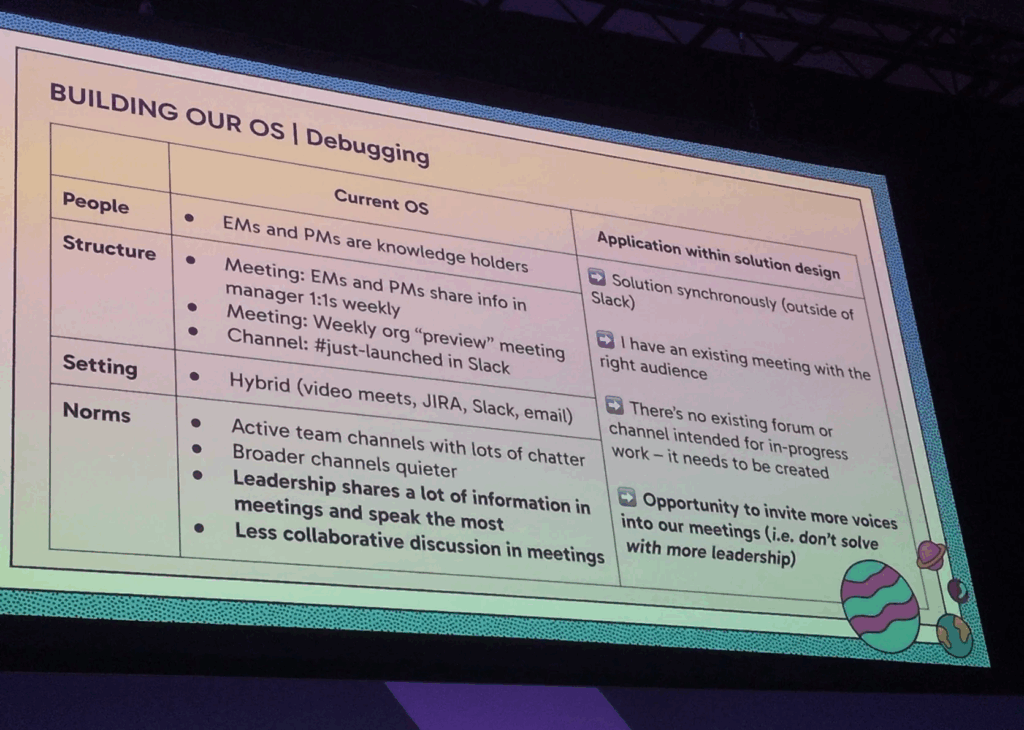
Meg Adams talked about implementing your team operating system: observe how things work and write down, then debug and iterate together. She shared a team operating system template so you can try it out yourself.

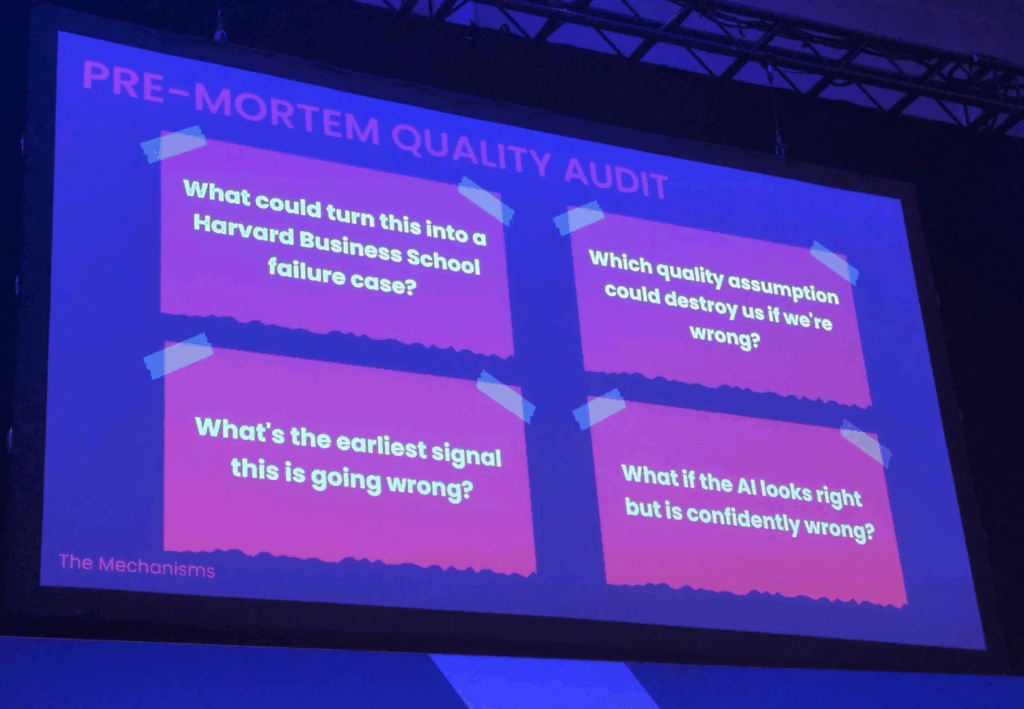
Christine Pinto talked about million dollar bugs, and how an everyday focus on quality can avoid huge, company-derailing issues. She shared a quality leadership toolkit to help you get started.
Then, it was time for my talk on 10 things nobody tells you about OKRs. I’ve written a far-too-long blog post series on this, so it’s nice to give people a TL;DR 25-minute version. In the talk I mentioned that I once wrote a blog post about scurvy. I think people thought I was joking … but it’s true and it has some useful points!
And finally…
- Hazel Weakly’s talk on hiring force multipliers led me to her site, which has lots of her past talks and a stack of blog posts like Pick your distributed poison and The future of observability.
- I missed most of Meri Williams’ talk (too many good things on at once!) but I did get to see her recommend this Dark Forest talk from Maggie Appleton, it’s interesting stuff.
- And I’m a big fan of Charity Majors talks — for example, a continuous delivery one I saw at Agile Manchester — and her conference-closing “In praise of ‘normal’ engineers” talk was full of good ideas. Charity’s shared a writeup on her blog.