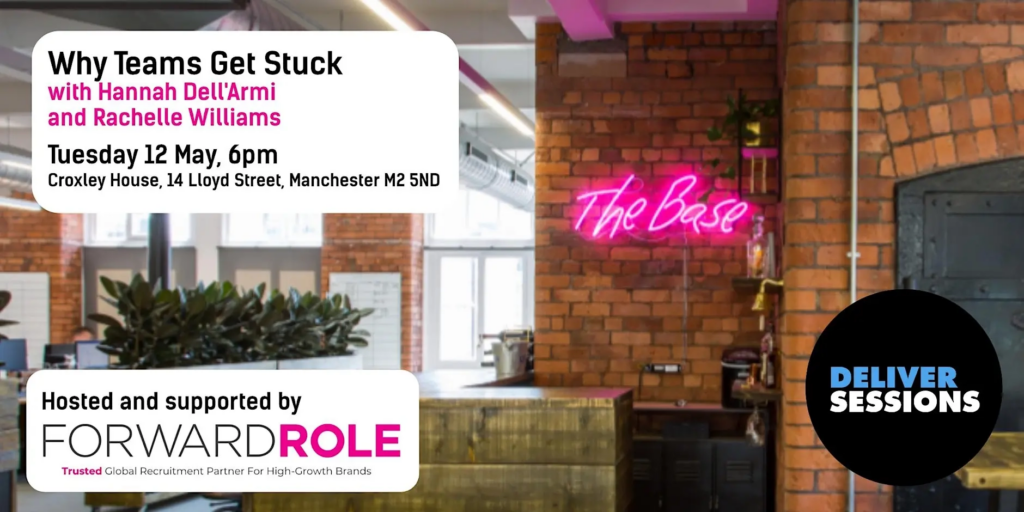
It’s been a relaxed start to the year: May’s Deliver Sessions meetup was the first one of 2026! This time we were at Forward Role‘s offices, just off Deansgate in Manchester city centre. Hannah Dell’Armi shared techniques for solving conflicts and frustrations in teams, pairing nicely with Rachelle Williams giving advice on how to teach new ideas and help people put them into practice.
6 brain science principles to make it stick
Most training, presentations or workshops are forgotten within a week. Not because the content was bad, but because they were designed for delivery, not for how the brain actually learns.
In this taster session, Rachelle Williams, certified Training from the BACK of the Room trainer, will take you through 6 brain science principles that change how you design and deliver sessions. No theory dump. No passive listening. You’ll experience the principles in action as you learn them.
You’ll leave with one immediate change you can make to your next session and a simple framework to carry into everything you facilitate or train.
— Rachelle Williams, facilitator, Agile coach and certified Training from the BACK of the Room trainer
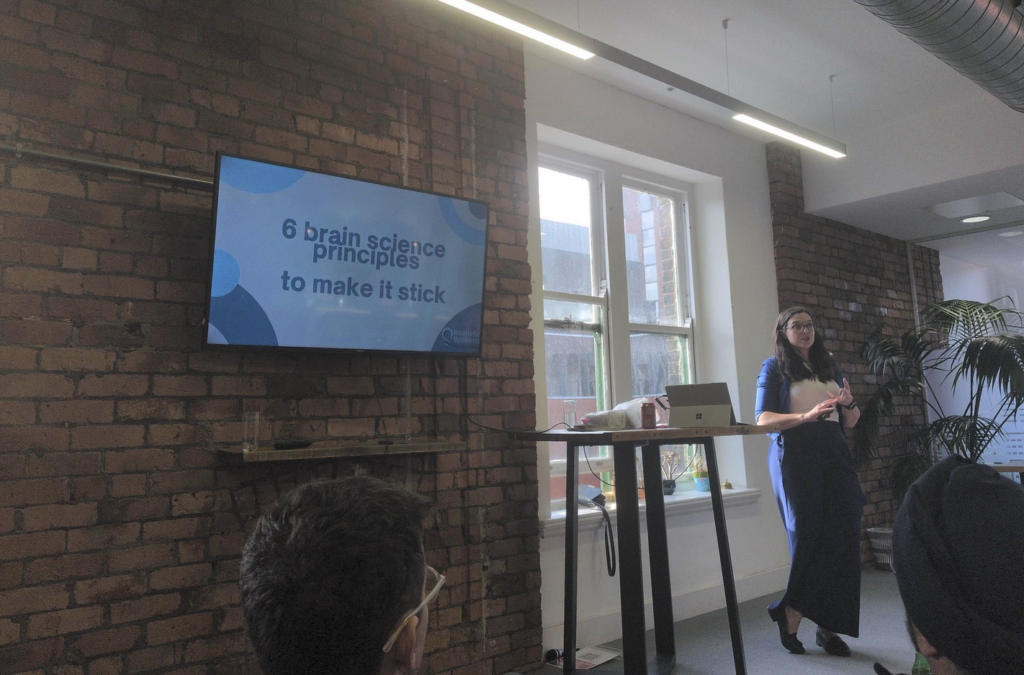
Rachelle asked us to imagine: 2 days of training where your energy and interest stay high, you remember all the things that get covered, and you leave feeling ready to put it all into practice. Something the opposite of the “death by PowerPoint” sessions lots of people have sat through.
Rachelle gave us a quick tour of different principles that help with this, and practical techniques to add them to any training or workshops you’re planning.
- Images over words: The “picture is worth a thousand words” advice can very much help with understanding and memory.
- Talking over listening: Asking people to talk through their impressions, explain new concepts to each other, try things and talk about how they found it…
- Different over same: Any small thing you can change in the way you present or explain something will help people engage with it.
- Short over long: Break up any long, detailed explanations with other activities — 10 minutes is long enough to talk/read before moving to activity.
- Movement over sitting: A chance to move helps with concentration, and gets more oxygen to the brain. This can be as simple as asking everyone to stretch for a moment, or any other
- Writing over reading: Getting your thoughts in order to write about a topic helps with understanding and gives people a chance to see where any gaps are.
For me, writing over reading stands out as a great way to learn. When I’m watching a talk (like this one), making live notes on what I’d like to remember helps me concentrate, and doing a summary blog post later helps me make sense of it. I also find writing longer pieces very useful; for example, reflecting on years of trying to get estimation to work well taught me lots about what conditions are needed for different techniques.
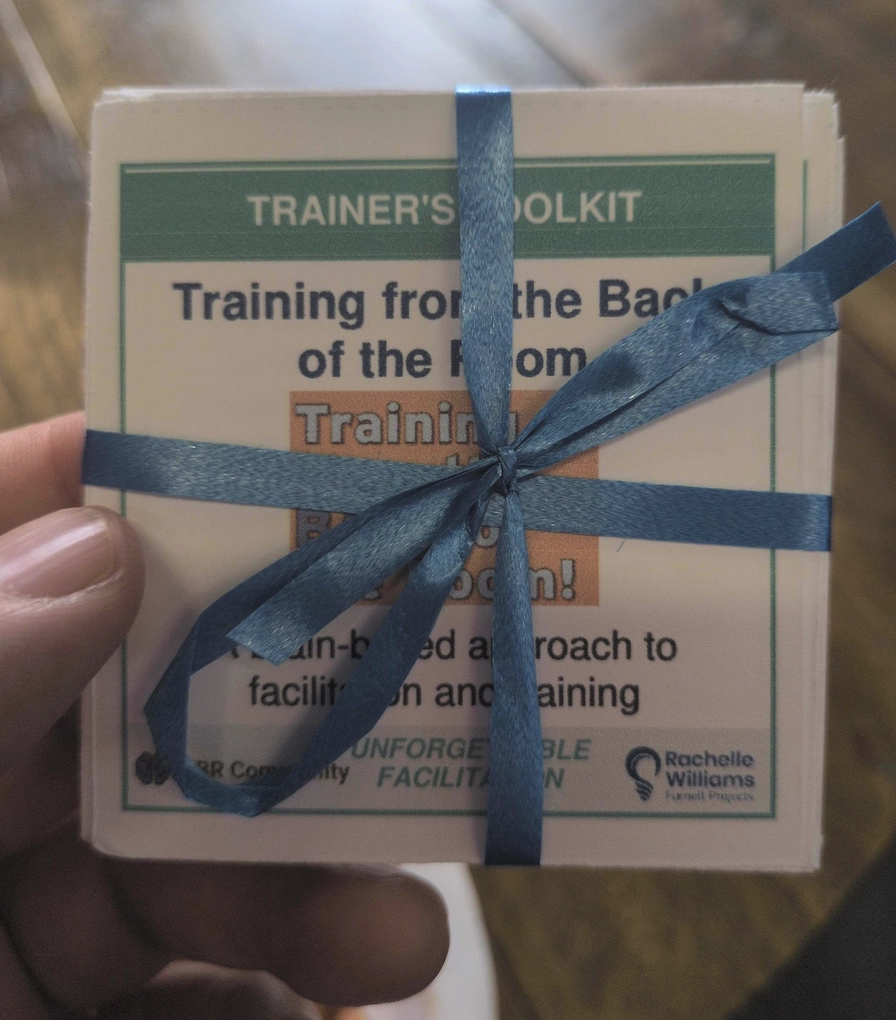
I also recognised a technique mentioned in talking over listening: the 4 C’s from Training from the Back of the Room (connections, concepts, concrete practice, conclusions). This structure is used in Emily Bache’s “learning hour” technical coaching sessions, it works brilliantly.
Rachelle pointed us to her website with support materials from this session, plus details of training and events she’s running if you’re interested in learning more.
Why good teams get stuck: from armour to authenticity
Do you work with teams and find yourself wondering why people aren’t taking the initiative, why conflict keeps bubbling under the surface, or why even small changes feel hard?
Often, it’s not about capability or intent — it’s about what’s happening beneath the surface.
Based on the work of Michelle Brody, this session explores the judgements, behaviours and actions that can leave people feeling threatened — and the “armour” we put on in response. With real examples we will explore the threat/armour cycles that can show up and the unintended impact they can have on teams.
You’ll leave with a ideas you can use with your teams to surface what’s really going on and create the conditions for healthier, more authentic ways of working.
— Hannah Dell’Armi, lead Agile coach
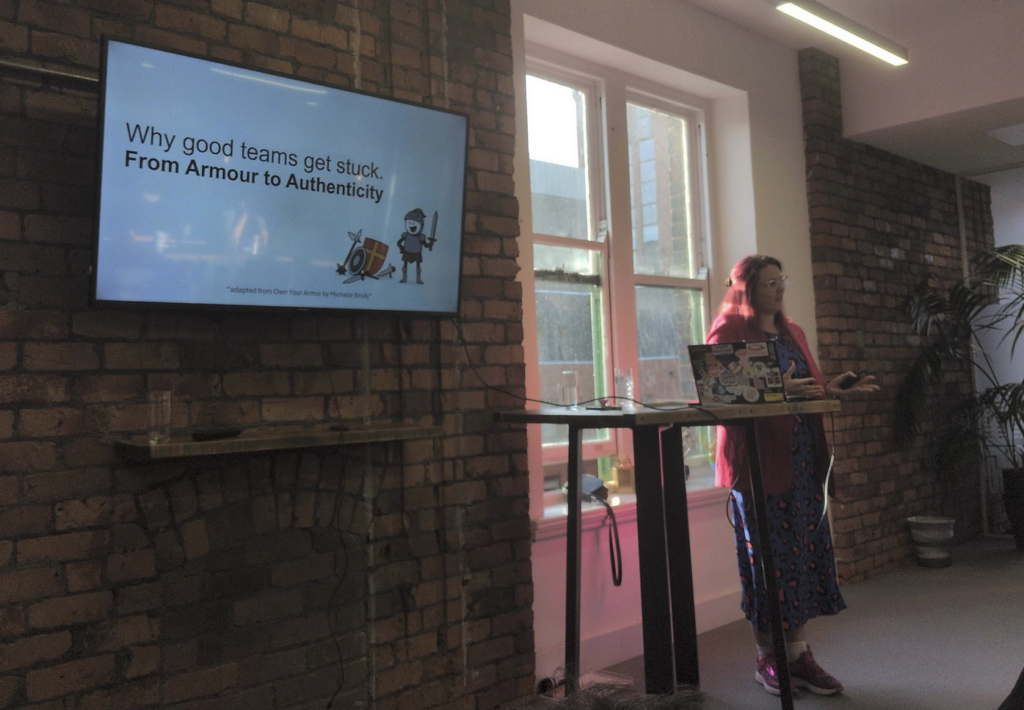
Hannah introduced us to ideas she’s used and adapted from “Own Your Armor”, a book by Michelle Brody. She started by asking: have we ever been on a team that felt “stuck”? What did that look like? It can be frustrating, hard to understand, and involve conflict.
A way to make it easier to work out what’s going on is to think about two types of conversations: some are “above the table” where we talk about strategy, operations, decisions, roles … and “under the table”, where unspoken or hinted-at topics include threats, judgements, past history, defensiveness.
We much prefer the “above the table” topics, they feel professional and comfortable. But to solve issues we need to talk about what’s under the table. It’s messy down there.
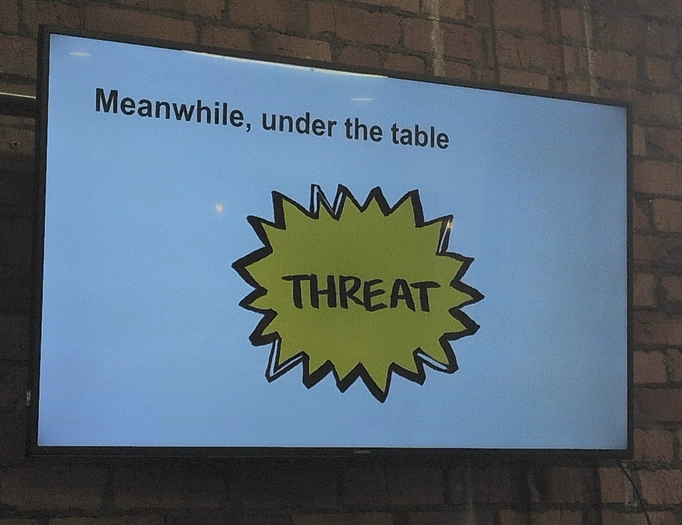
An example: Hannah was asked to come and help a team who’d done lots to improve their ways of working (a charter, manuals of me, lots of process changes), but were still experiencing frustration and conflict, mainly around “responsibility creep”. Hannah was asked to come and do a “roles and responsibilities” session. It seemed like everyone came away from that with clear agreements, but within a week the same problems were back. “This session was like spraying a fire extinguisher on top of the table, when the fire’s underneath.”
Hannah gave us a tour of various fictional characters, who seem difficult to get along with, and looked into their fears and motivations: Anna who’s a nice person and wants her teammates to succeed, but struggles with the chaos and lack of control in a large organisation. This causes her to “armour up” to protect herself and try to control what she can, which might look like: being difficult, a control freak, a micromanager.
Various other characters had understandable reasons for feeling threatened and putting armour on. This causes them to do things that are seen us unhelpful — the armoured version acts differently. All the reasons for this are under the table, we don’t discuss them. These armoured behaviours interact in a team: the unhelpful, incomprehensible behaviours cause more people to feel threatened and respond by putting on more of their own armour, which can eventually lead to most of the team’s time and energy being taken up by these cycles.
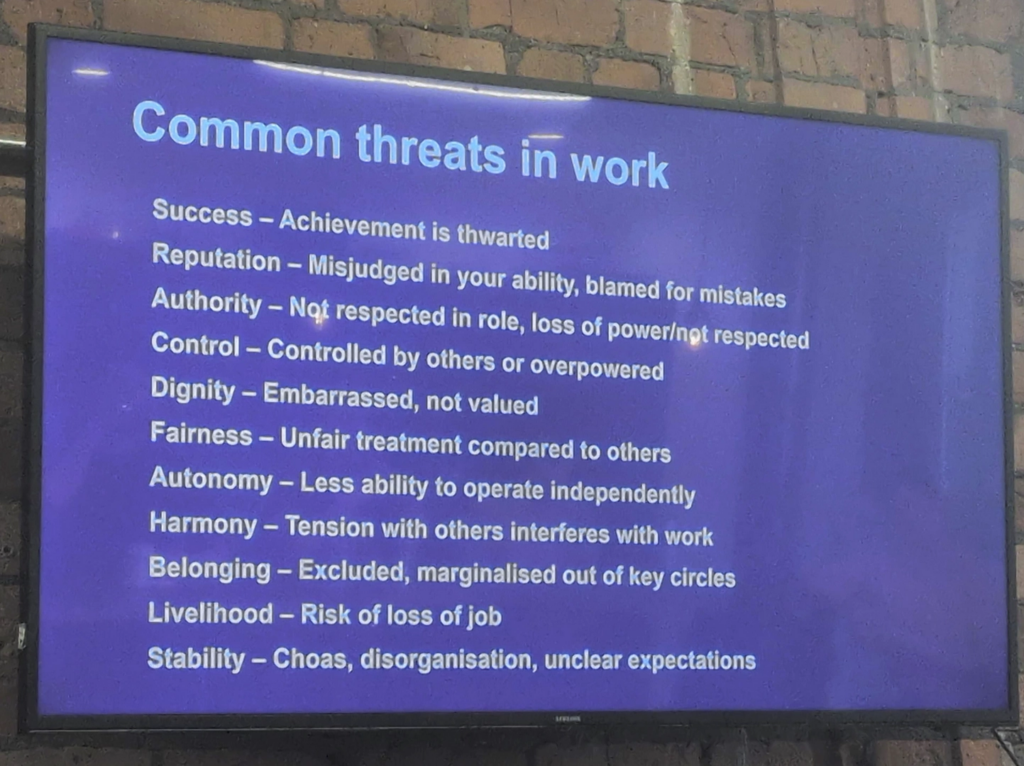
Empathy is important: if you can understand where someone’s coming from, you can help change how you work together. Lots of these cycles can be tackled by asking:
- What threats are people responding to?
- What armour are people wearing in response to these threats?
Hannah gave us handy worksheets to have a think about what armour we might be using, then discuss using Pair Share as recommended in Rachelle’s talk.
![A few pages from the handout. Left side is descriptions of threats you might experience, an the right is ways your fight or flight armour might respond.
Full text follows - there's a lot!
Threats to Reputation
Your capabilities are misunderstood, and others see you as underperforming.
You get blamed for mistakes.
Your relevance to the team isn't acknowledged or appreciated.
You work with high-stakes partners whose opinion of your value could change in an instant.
Roles and expectations aren't clear so you don't know what impact you can have.
Threats to Fairness
Your performance is judged against unclear or unfair expectations.
You aren't paid what you deserve or others at the same level get more pay.
Resources are distributed unfairly-e.g., others get more staff than you do.
Work is distributed unfairly; you have to do more than others at the same level.
Promotion speed or career growth has been slower than your peers.
More praise is given to peers, while your success doesn't get the same notice.
You work with others who don't play by the rules and who still get ahead.
Threats to Authority
Your subordinates don't respect your role as a leader.
Your reports get more respect from your boss than you do.
People go around you for answers or help, undermining your authority or role.
Your reports say "yes" to you in meetings but then make different decisions on their own.
Threats to Belonging
You report with others to one boss, but there is no sense of being a part of a team.
Your area is siloed and disconnected from the larger company's initiatives.
You are left out of key meetings/projects.
You are left out of social groups at work.
There are cliques at work.
Threats to Dignity
You are seen as more junior than you are.
You are embarrassed publicly in a meeting.
You are the focus of gossip.
You are moved into a role of lower status.
You, your voice, or your contribution to the work are ignored.
Armour
When you are under threat, what types of armour do you use?
Fight Armour
Advocate strongly for your position in
debates
Advocate strongly for more resources
Take charge to get results
Speak up in meetings, take more airtime
Advise others how to do a better job
Demand/command/yell
Insist you are right [] Push for resolution now
Take control, make rules
Decisively create or change processes
Complain/protest/lead pushback
Step up so you can stand out and prove
Tout your strengths and achievements
yourself against unfair judgment
Push your way in, push others out
Micromanage
Build alliances, build your strategic position
Overwork, don't delegate
Work around slower colleagues
Work around ineffective leaders
Point out problems you see
Speak out against injustice
Find allies to help fight poor leadership or key causes
Be the comforter when others have complaints
Flight Armour
Accommodate/appease to end the tension
Avoid conflict
Take control by being extra cautious
Deflect feedback, blame others
Explain how you are misunderstood
Don't admit mistakes, deny responsibility
Change the subject
Intellectualize to avoid emotion
Escalate to boss rather than deal with coworker
Divest caring about outcomes
Withdraw effort, initiate less
Procrastinate on annoying tasks
Be less collaborative, work head down
... and more going out of frame.](https://neil-vass.com/wp-content/uploads/2026/05/image-7-1024x642.png)
If you’d like to know more about this “Own Your Armor” idea, you could listen to an interview with the author on the Game of Teams podcast, or buy the book.
More from the meetup
The next Deliver Sessions will be on 7 July 2026 — details and sign up link will appear about 3 weeks in advance (follow the meetup on Eventbrite to get notified). While waiting for that, you could:
- Follow the new Deliver Sessions LinkedIn account (more ways to hear news from the meetup)
- Look out for other Manchester area meetups on the North West Tech Community calendar
- Read notes from past events in the Deliver Sessions archives on this blog.